Publix
- 4.8
- Rating
- 5.00M
- Installs
- Free
- Price

 Analysis by App-foxy
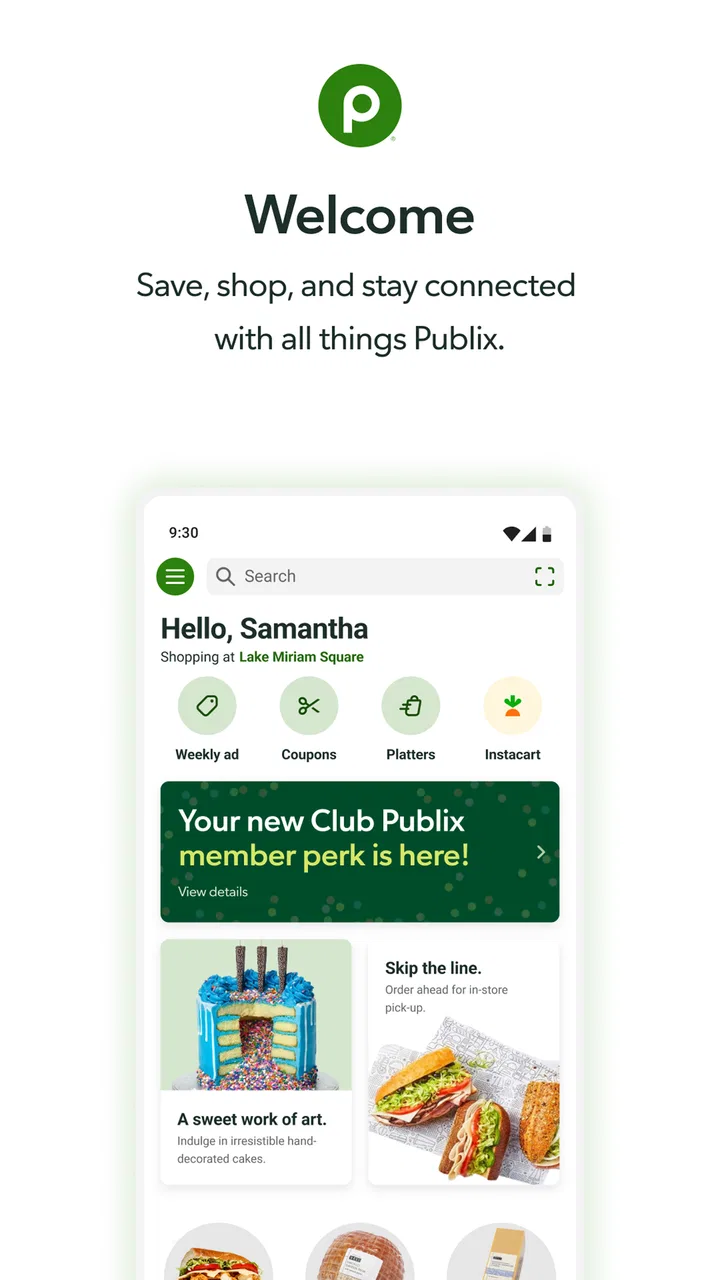
When I first opened Publix, I expected a simple store companion rather than an app I would keep checking. That turned out to be the right way to approach it. It is a free lifestyle app from Publix Super Markets Inc. designed around the practical parts of shopping: finding relevant deals and using the experience in the context of the store you visit. Its store summary, “Your store’s deals, where you are,” captures the central idea without promising to replace every shopping tool.
For a first-time user, the important thing is to think of it as a companion for Publix shopping, not as a general coupon marketplace or a complete grocery-planning system. The experience makes the most sense when you already shop at Publix, know which location you normally use, and want a quicker way to see what is relevant there. If you rarely visit Publix, the app has less reason to stay on your phone.
What to expect before you start
The app sits in the lifestyle category, and that classification feels accurate. It is built for an everyday errand rather than entertainment or complex account management. The developer is Publix Super Markets Inc., and the app is free with an Everyone content rating, so it is approachable for households where several people may be involved in planning or shopping.
You May Also Like

 Blood Strike: 2.5 Anniversary
Blood Strike’s Loadouts Turn Every Drop Into a Tactical Gamble
A close look at Blood Strike’s custom loadouts: how fast access to signature weapons reshapes its battle royale rhythm, rewards preparation, and narrows the gap between fights.

 Pandora - Music & Podcasts
Pandora’s Music Is Easy to Start, but Harder to Recover
Pandora’s strength is its low-effort path from a seed to a station. Its weak spot is how much confidence it asks you to place in connection, setup, and quiet recovery.

 8 Ball Pool
 Is Built on Rivalries, Rematches, and Routine
A close look at the rivalries, rematches, shared routines, and unanswered safety questions that turn a quick pool match into a persistent mobile community.

 Samsung Music
’s Quiet Strength Is Playing What You Already Own
Its reach comes less from spectacle than from dependable access to a personal library. That simplicity is both the app’s strongest retention engine and its ceiling.

 AccuWeather: Weather Radar
AccuWeather Review: A Quick, Clear Forecast for Everyday Decisions
For everyday plans, the best forecast is the one you can understand quickly. AccuWeather makes rain timing, radar, and local conditions easy to act on, with a few trade-offs.

 Hill Climb Racing
Why Hill Climb Racing Still Turns Crashes Into One More Run
A tiny car, a bumpy hill and one more upgrade: Hill Climb Racing keeps resurfacing because its simple chaos makes every near-miss feel personal.
More From Our News Desk



Its reception is also a useful signal. Publix has a 4.8 average from around 150 thousand ratings, with roughly 18 thousand written reviews, and it has passed 5 million installs. Those figures do not guarantee that every screen will suit you, but they suggest that the app has become a familiar tool for a large number of shoppers. I would still judge it by your shopping habits, because a store-specific app is naturally most valuable to people who regularly use that store.
The current version is 4.77.1 and requires iOS or Android 10 at minimum. That requirement is worth checking before you plan around it, especially if you use an older phone. On a compatible device, the sensible expectation is a focused shopping aid: open it when planning a Publix trip, check what applies to your selected store, and use that information to make a more deliberate list or visit.
One thing I appreciate is that the app’s purpose is easy to explain to another person. If a family member asks what it does, I can say that it helps bring Publix deals and store-related information together in one place. That clarity is more useful than a crowded app filled with unrelated grocery content.
Who will get the most from it
I would recommend it first to regular Publix shoppers who want to check store-specific offers before leaving home. It is also a good fit for anyone who dislikes wandering through a store trying to remember why a certain item seemed worth buying. A quick look before shopping can turn a vague trip into a more intentional one.
It may be less useful for someone who shops at many different supermarket chains and wants one universal coupon wallet. In that situation, a broader grocery or coupon app may be more convenient because it keeps multiple retailers together. The trade-off is that a general app may not feel as closely tied to the Publix location you actually use.
I would also skip installing it solely because you want a full meal-planning system, detailed pantry inventory, or a replacement for every grocery-list method. The app’s strongest reason to exist is its connection to Publix shopping. If your main need is recipe organization or household inventory, another dedicated tool will probably serve you better.
Getting from installation to a useful first visit
I start by treating setup as part of planning the shopping trip, not as a chore to rush through. Choosing the Publix location I actually visit gives the app a useful point of reference; after that, I can focus on whether its information helps me make a better decision. The next step is building a quick, repeatable routine around that store context.
Start with the store context
After installing the app, I would begin by making the shopping context as accurate as possible. The wording around “your store” matters: deals and information are more useful when they reflect the Publix location you normally visit. If the app asks you to choose or identify a store, take a moment to select the one you actually use rather than leaving the first convenient option in place.
This small step prevents a common kind of disappointment. A shopper may see an offer, assume it is relevant, and only later realize that the selected store is not the location they intended. Store-based apps reward accuracy at the beginning. I treat the chosen location as the foundation for everything I check afterward.
Once the initial setup is complete, I would not spend a long time exploring every screen. Instead, I would look for the area that presents current deals or store-related shopping information. The first meaningful success is not simply opening the app; it is finding something that can change what you buy or how you plan the visit.
A realistic first-use routine
Imagine that I am planning a quick weekday dinner and need to stop at Publix after work. Before leaving, I open the app and check the offers connected with my selected store. I notice a deal that matches something already on my mental list, then adjust my shopping plan around that information. I am not trying to browse endlessly. I am using the app for one decision that can make the visit more focused.
That is the workflow I find most convincing: open the app before the trip, check the store-specific information, decide which items are genuinely useful, and then shop with that short plan in mind. It is better than treating every deal as a reason to buy. A discount is only helpful when the product fits your household, your meal plan, or a purchase you were already likely to make.
For a larger household, the same routine can support a shared conversation. One person can check the app while another reviews what is already at home. This avoids the familiar problem of buying an attractive deal that duplicates something in the cupboard. The app does not need to become the household’s entire planning system to be useful; it only needs to improve the decisions you make before entering the store.
My practical tip is to check it at a calm moment rather than in the parking lot. Looking through offers while rushed makes it easier to miss details or make impulse choices. A short review at home gives you time to compare what you see with your actual needs.
How to turn a deal into a better shopping decision
The most useful habit is separating “interesting” from “relevant.” When I see a deal, I ask three questions: would I buy this without the offer, can I use it before it becomes unnecessary, and does it fit the store trip I am already making? This simple filter keeps the app from encouraging a larger basket just because something appears appealing.
Another helpful approach is to use the app as a pre-trip checkpoint rather than a live shopping companion. Checking everything while walking through the aisles can slow you down and make the experience feel more complicated. I prefer to review the information beforehand, remember the few items that matter, and keep my attention on the actual shop.
For people who shop at Publix on a regular rhythm, the app can become part of a repeatable routine. Check before the weekly trip, compare the offers with the household list, and ignore anything that does not serve a real purpose. The benefit comes from consistency, not from opening it constantly.
Where first-time users may hesitate
The phrase “where you are” can create an expectation that the app will automatically understand every detail of your current shopping situation. I would not rely on that assumption. Store context still matters, and I recommend confirming that the selected Publix location matches your intended trip before making decisions based on what you see.
Another possible source of confusion is the difference between seeing a deal and knowing exactly how it fits into your purchase. The app can help you discover relevant information, but you still need to read the offer carefully and make sure the item is the one you want. I would avoid treating a prominent offer as a guarantee that every related product or package has the same terms.
There is also a practical limitation in the app’s narrow focus. If you want one place to compare Publix with several competing supermarkets, this is not the natural tool for that job. It is designed around Publix, so its strength is relevance within that retailer rather than neutrality across the entire grocery market.
People who prefer paper lists or a very minimal phone setup may find that adding another shopping app feels unnecessary. That is a fair objection. I would install it only if the store-specific deal information changes how you plan to shop. If you already have a routine that works and never use digital offers, the benefit may be too small to justify another app.
Privacy, permissions, and everyday comfort
As with any shopping app that can use location-related context, I would pay attention during setup and choose only the access that makes sense for how I intend to use it. If I am comfortable selecting my store manually, I do not need to build my routine around automatic location awareness. The goal is convenience, not surrendering control of the shopping process.
I also recommend keeping expectations realistic about account and device behavior. If several people in a household use the app, agree on which Publix location and shopping routine you are following. Otherwise, one person may review information for one store while another shops at a different one. That is not a dramatic problem, but it is exactly the sort of small mismatch that makes a straightforward app feel unreliable.
The Everyone rating makes it suitable for general household use, but age suitability does not remove the need for sensible shopping judgment. Children may be able to view the app, yet an adult should still decide which deals fit the family budget and needs. The app can present shopping information; it cannot make those personal decisions for you.
How it compares with usual alternatives
The closest alternative is often the retailer’s website or printed store material. A website may be preferable if you do not want another installed app, while printed information can be easier for someone who avoids screens. Publix’s app becomes more attractive when you want to check the same store-related information from your phone as part of a repeatable pre-shopping routine.
A general coupon app offers a different advantage: breadth. It may collect offers from several retailers, which is useful for people who compare stores or shop wherever the best price appears. The downside is that broader coverage can make the experience less focused. With Publix, I know the purpose immediately; with a multi-store tool, I may spend more time filtering.
A standard notes app is still better for a completely custom grocery list. I can write brands, quantities, meal ideas, and reminders in any format I like. Publix is not a replacement for that flexibility. I see it as a companion: use a notes app for the household list if that is your preference, then use Publix to check store-specific deals before the trip.
That combination is actually stronger than forcing one app to do everything. I would not choose Publix for elaborate list management, and I would not choose a generic notes app to discover retailer-specific offers. Each tool has a clearer role when you let it do the job it handles best.
Small habits that improve the experience
First, choose the correct store before browsing seriously. This is the most important setup habit because it keeps the information tied to the trip you are actually planning.
Second, review deals against a list or meal plan. This turns the app from a temptation machine into a decision aid. If an item is not useful, the fact that it appears in the app is not a reason to buy it.
Third, check before leaving rather than waiting until checkout. You have more time to think at home, and you are less likely to make a hurried purchase or forget why you opened the app.
Fourth, keep a short mental distinction between discovering an offer and completing the purchase. The app can help you notice possibilities, but the final value depends on selecting the right product and following the offer’s displayed details.
Finally, reassess after a few shopping trips. If it consistently helps you find useful Publix deals, it has earned its place on your phone. If you open it and rarely act on what you see, a website, printed material, or your existing list may be enough.
My recommendation after using it
I see Publix as a focused, practical app rather than an all-purpose grocery organizer. Its best moment is the few minutes before a Publix visit, when store-specific deal information can help me decide what belongs on the trip. The free price removes the biggest barrier to trying it, and the broad adoption reflected in its rating and install total makes it a reasonable option for regular Publix customers.
At the same time, I would not recommend it blindly to every shopper. People who want cross-store comparison, advanced meal planning, or a fully customizable grocery database should look elsewhere or pair it with another tool. The app is most successful when you accept its boundaries and use it for a clear purpose.
If you are installing it for the first time, my suggested path is simple: set the correct Publix store, find the current deal information, compare it with what you genuinely need, and use one relevant discovery to improve your next shopping trip. That first useful result is enough to judge whether the app belongs in your routine. In my experience, that focused approach makes Publix feel less like another notification-heavy retailer app and more like a convenient check before an everyday errand.
FAQs for Publix
01What is Publix and how does it work?
Publix is a comprehensive app designed to enhance your grocery shopping experience by providing a seamless way to browse products, create shopping lists, and access exclusive deals. The app features a user-friendly interface and allows you to explore weekly ads, find recipes, and even order groceries for delivery or pickup.
02Is the Publix app free to download and use?
Yes, the Publix app is free to download on both Android and iOS devices. While the app itself does not require any subscription fees, be aware that some services, such as delivery, might incur additional charges. Always check for any applicable fees before confirming your order.
03Can I use the Publix app to order groceries online?
Absolutely. The Publix app provides an easy-to-use platform for online grocery shopping. You can select your preferred store, browse through various categories, add items to your cart, and choose between delivery or curbside pickup options. The app also allows you to track your order's progress.
04Does the Publix app offer digital coupons and discounts?
Yes, the Publix app is equipped with a digital coupon feature that helps you save money on your purchases. By logging into your account, you can clip available coupons and apply them during checkout. Additionally, the app provides access to weekly ads and special promotions to maximize your savings.
05How can I ensure my personal and payment information is secure in the Publix app?
Publix prioritizes customer security by employing advanced encryption methods to protect personal and payment information. The app requires a secure login and encourages users to enable additional security features like biometric authentication. Always keep your app updated to benefit from the latest security enhancements.
Pros
- User-friendly interface for easy navigation.
- Wide range of products available.
- Convenient online shopping options.
- Loyalty rewards program benefits.
- Reliable customer service support.
Cons
- Limited delivery areas for groceries.
- App occasionally experiences slow loading.
- Some features require frequent updates.
- Limited payment options available.
- Lacks personalized recommendations.

Publix
Gallery